If ransomware has compromised your environment, your normal infrastructure may not be trustworthy. A clean room gives you a safe place to rebuild.
What it is
An isolated environment, on-premises or cloud, with its own identity, network and tooling, used to recover and inspect systems before returning them to production.
Why it matters
- Prevents reinfection from compromised infrastructure.
- Allows forensic analysis alongside recovery.
- Lets you rebuild identity services such as Active Directory safely.
Do you need one?
If you are regulated, run critical services, or could not tolerate a reinfection, the answer is usually yes. The design can scale from a minimal cloud environment spun up on demand to a permanently provisioned site.
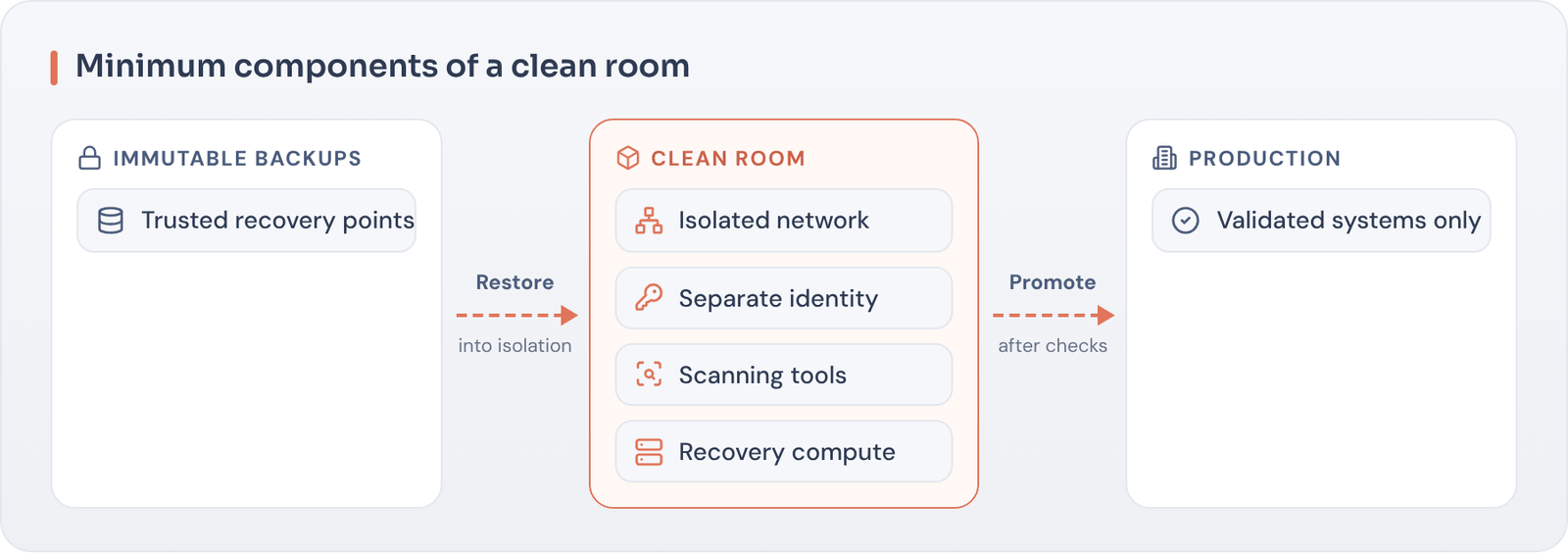
Minimum components of a clean room
- Isolated network segments with tightly controlled connectivity
- A trusted identity source rebuilt from known-good backups
- Security tooling to scan and inspect recovered systems
- Access to immutable, isolated backup copies
- Documented procedures to promote validated systems back to production
Cloud-based clean rooms reduce the cost of keeping idle infrastructure, but the network design, identity rebuild and promotion process still need to be designed and rehearsed in advance.
Key takeaways
- A clean room separates recovery from compromised infrastructure.
- Identity is usually the first thing to rebuild.
- Design it before you need it: and test it.
Want an independent view of your recoverability?
Book a Recovery Readiness Call and we’ll help you turn assumptions into evidence.