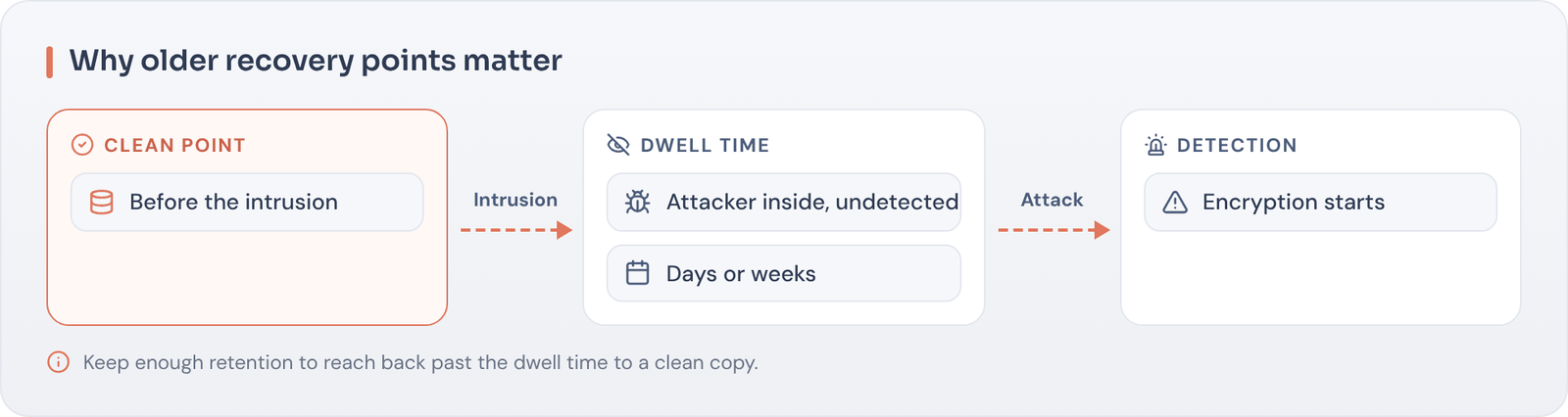
Attackers rarely deploy ransomware the moment they get in. They explore, escalate privileges and quietly disable defenses first. That dwell time has big implications for your backups.
The problem
If attackers were present for weeks, your most recent backups may contain their tools or backdoors. Restoring the latest copy could restore the attacker too.
What to do about it
- Keep retention long enough to reach back before likely compromise.
- Use scanning and analytics to identify the last clean recovery point.
- Recover into an isolated environment and validate before reconnecting.
- Rebuild identity systems from trusted sources.
Balancing retention and cost
Longer retention costs more storage, especially on immutable tiers. A common approach is to keep frequent recovery points for a short period, then fewer points, weekly or monthly, for longer. That keeps cost manageable while still reaching back before a likely compromise.
Agree retention with security teams, who can advise on realistic dwell times, and with compliance teams, who know your regulatory obligations.
Key takeaways
- Attackers often dwell before encrypting.
- Retention must reach back before compromise.
- Identify and validate the last clean point.
Want an independent view of your recoverability?
Book a Recovery Readiness Call and we’ll help you turn assumptions into evidence.