
A successful backup job tells you data was copied. Only a restore test tells you it can come back. Yet recovery testing is often the first thing to slip when teams are busy.
Levels of testing
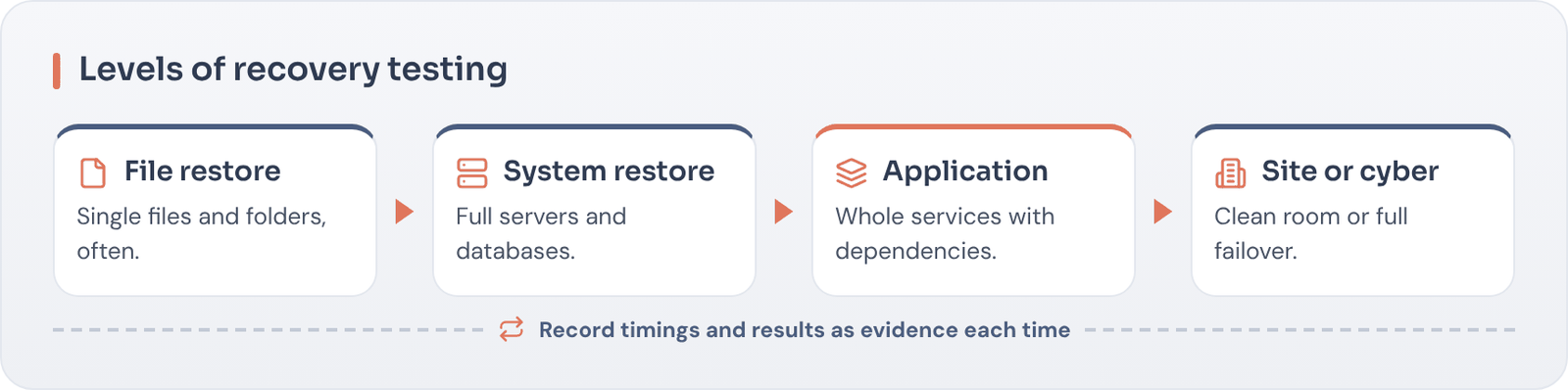
- Automated verification: boot and health-check VMs from backup.
- File and database restores: sample restores on a schedule.
- Application recovery: restore a full service with dependencies.
- Cyber recovery tests: recover from an isolated copy into a clean room.
How often
Automate frequent verification, test critical applications at least quarterly and run a full cyber-recovery test at least annually, more often if regulated.
Keep the evidence
Record what was tested, when, how long it took and the outcome. This is what auditors and insurers will ask for.
What a good test report contains
- Scope: which systems and data were recovered
- Source: which backup copy and recovery point were used
- Timings: from start to usable service, compared with RTO
- Issues found and how they were resolved
- Sign-off by the application owner
Over time these reports show trends such as improving recovery times, recurring problems and gaps in documentation that help prioritize investment.
Key takeaways
- Layer automated and manual tests.
- Test full services, not just files.
- Evidence turns testing into assurance.
Want an independent view of your recoverability?
Book a Recovery Readiness Call and we’ll help you turn assumptions into evidence.