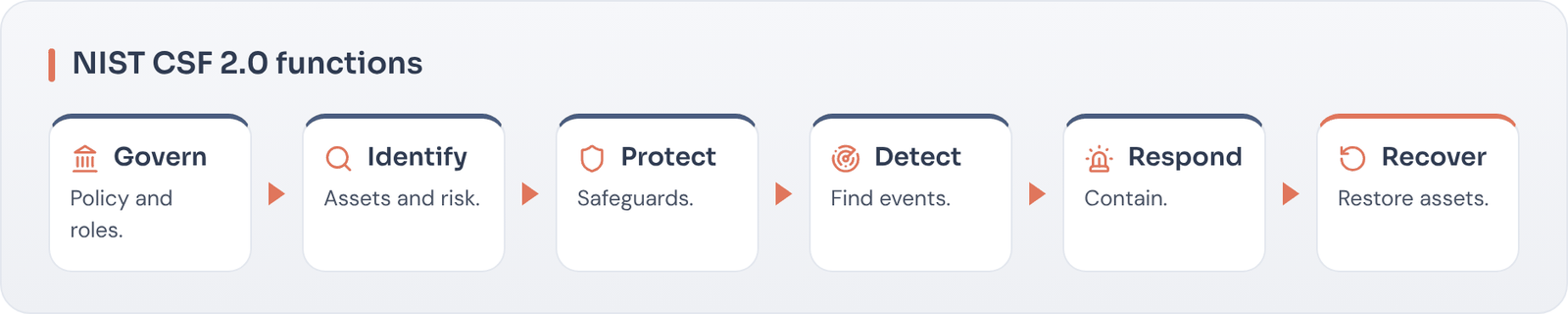
The NIST Cybersecurity Framework 2.0 organizes cybersecurity into six functions: Govern, Identify, Protect, Detect, Respond and Recover. Recover is where data protection proves its value.
What Recover covers
Recover focuses on restoring assets and operations affected by an incident, executing recovery plans, verifying the integrity of restored assets and communicating during and after recovery.
Translating it into capabilities
- Documented, tested recovery plans for critical services
- Immutable, isolated backups to recover from
- Integrity checks before restored systems go live
- Clear roles, decision rights and communications
Don’t forget Govern
CSF 2.0 added Govern to emphasize leadership, risk management and accountability. Recovery capability needs executive ownership and funding.
Practical questions for each Recover outcome
- Is there a documented recovery plan for each critical service, and is it current?
- Do we verify the integrity of backups and restored systems before use?
- Do we know the order in which services must be restored?
- Who communicates with staff, customers and regulators during recovery?
- How do lessons learned feed back into plans and architecture?
Answering these with evidence gives a clear picture of how well the organization would recover and where to focus improvement.
Key takeaways
- Recover is about restoring operations with integrity.
- Plans must be documented and tested.
- Governance gives recovery the ownership it needs.
Want an independent view of your recoverability?
Book a Recovery Readiness Call and we’ll help you turn assumptions into evidence.